
BMW AIRHEAD · SERVICEABILITY
Airbox modification
Rally-derived fast access, refined with positive lid retention and a deliberately restrained installation.
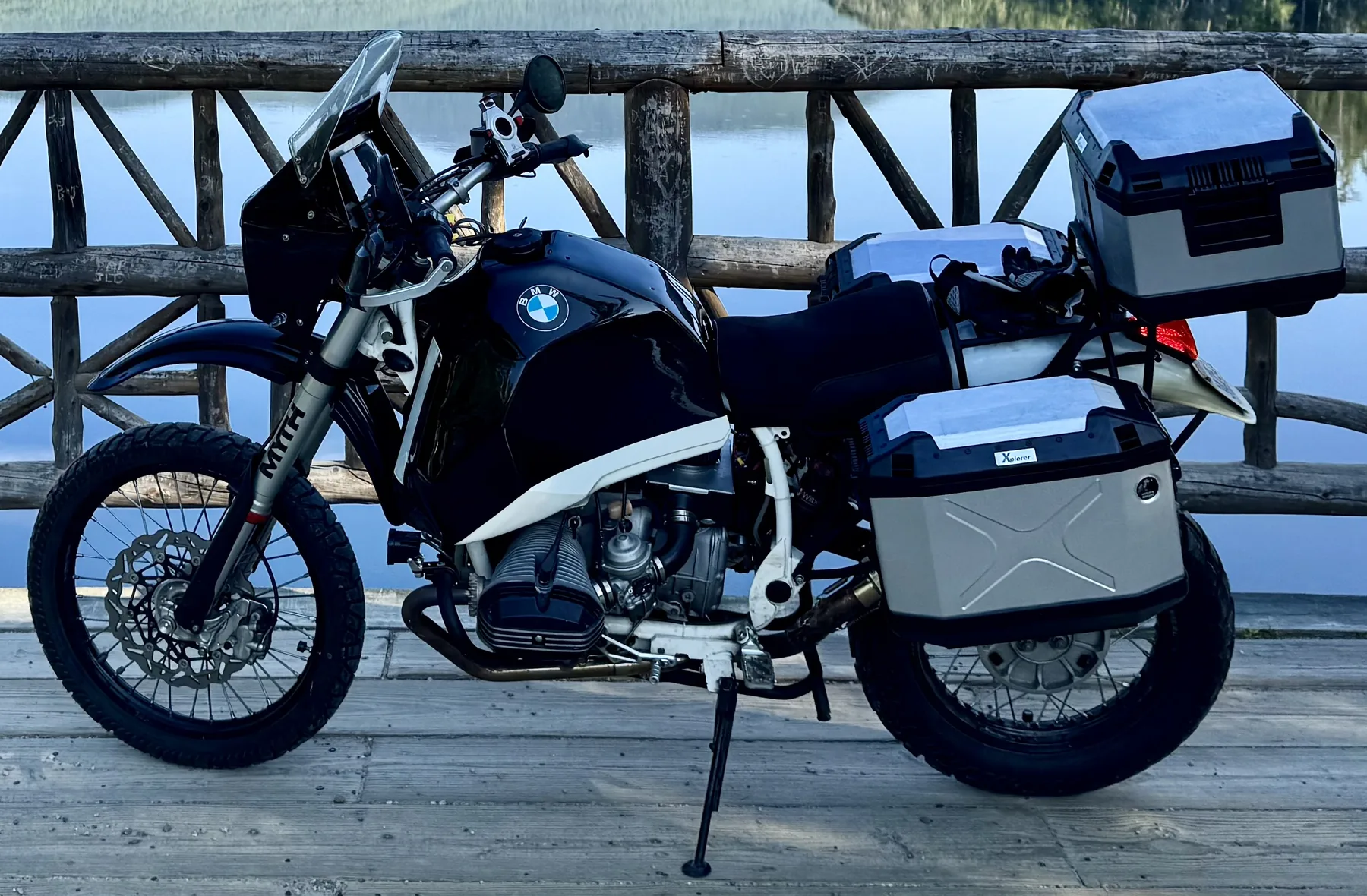
Designed to disappear
A serviceability modification should make itself obvious when the motorcycle is being worked on—and otherwise leave the motorcycle alone.
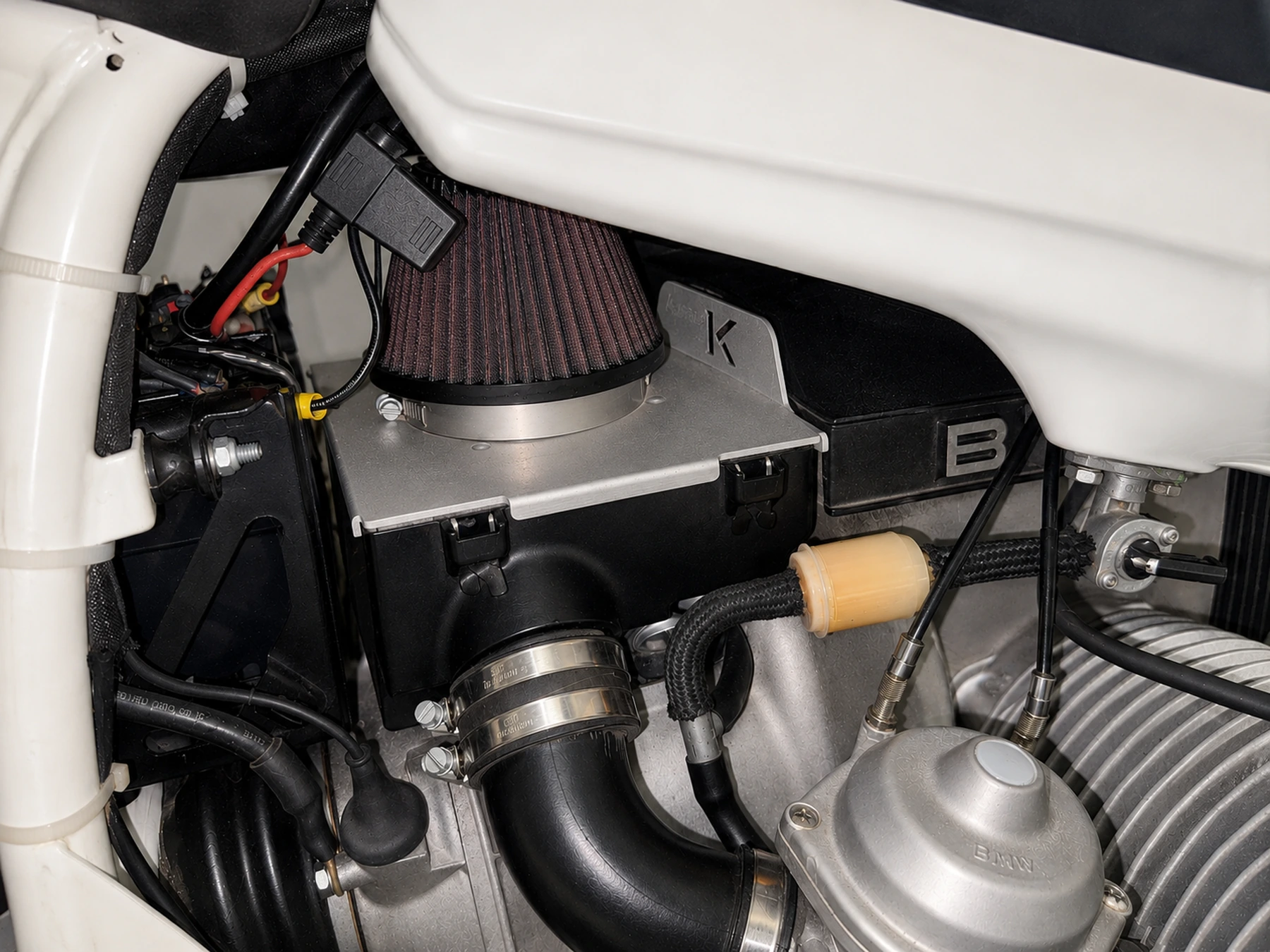
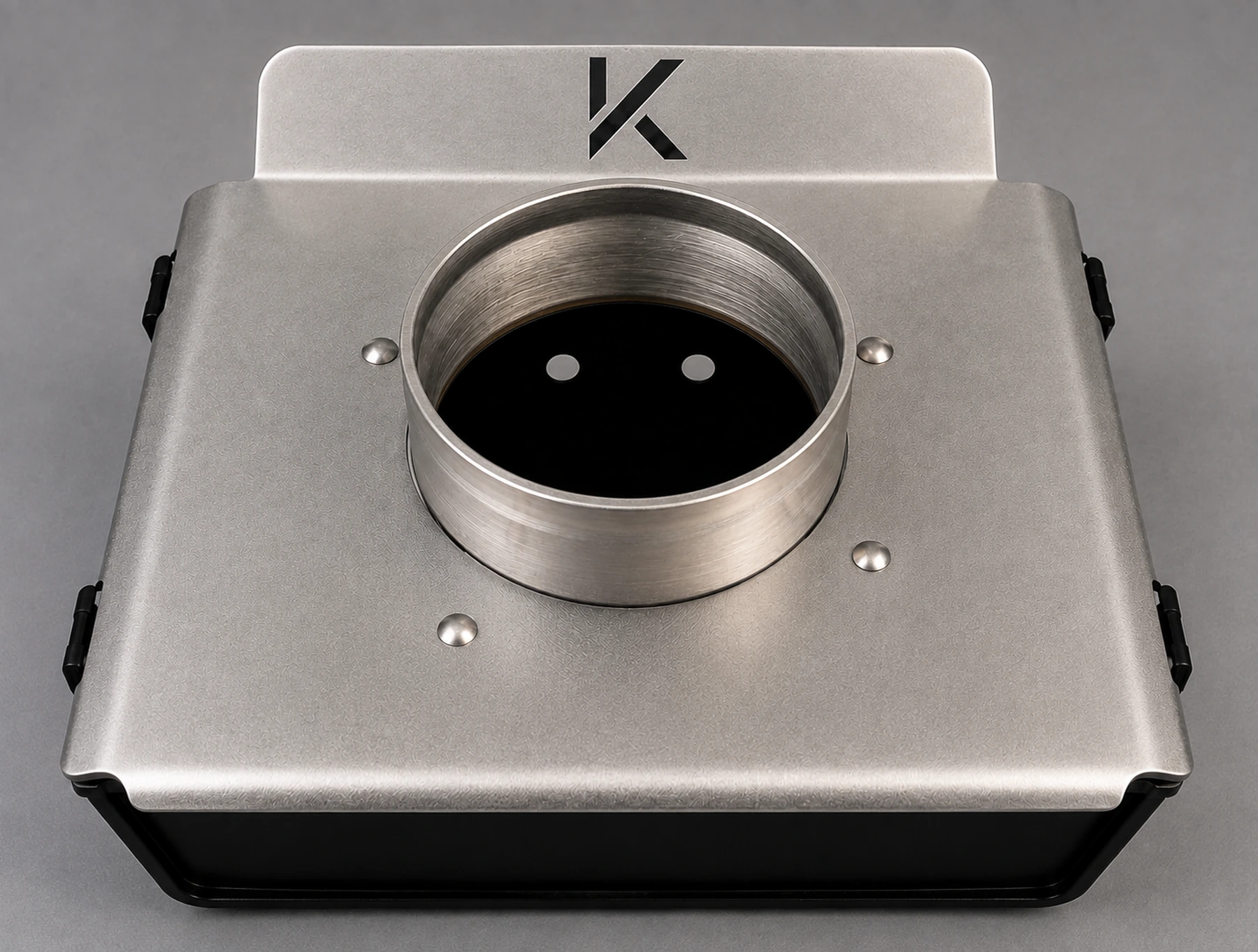
The Custom Konrad airbox modification began with that premise. The original BMW lower airbox architecture remains recognizable. What changes is the service interface above it: a formed aluminum lid, a traditional mounting ring for this style of K&N filter, and two positive quarter-turn DZUS fasteners connecting the lid to the lower pan.
The result is deliberately quiet on the motorcycle. In use, the hardware recedes into the surrounding frame, tank and engine. During service, the two quarter-turn fasteners provide the satisfying mechanical feedback of a deliberate release and positive re-engagement.
Rally origins, refined for travel
The idea of making the BMW Airhead air filter quickly accessible did not originate with Custom Konrad.
HPN developed a remarkably direct rally-service solution: rubber bands hooked into the four corner tabs of the lower airbox pan retain the filter and can be moved out of the way almost instantly. Matias Corea of Myth Motor subsequently adopted the same basic philosophy.
That approach remains compelling—and it remains a possible configuration of the Custom Konrad design.
The Custom Konrad modification adds another layer of mechanical security. Two quarter-turn DZUS fasteners positively connect the aluminum lid to the lower airbox pan. Access remains fast, but releasing the filter retention no longer leaves the lid free to float, shift or separate from the assembly.
For the current configuration, the traditional mounting ring used with this style of K&N filter is retained. It provides a mechanically familiar and visually restrained installation while the DZUS fasteners make opening the airbox a matter of two deliberate quarter turns.
The rally-derived rubber-band arrangement remains an attractive variant where absolute filter-change speed matters. Most Custom Konrad filter changes, however, are expected to occur under somewhat less urgent circumstances than a Paris–Dakar service stop.
A small problem worth solving well
The objective was never to replace the entire BMW intake system merely because a different arrangement could be fabricated. The design preserves what BMW got right and changes only the interfaces that benefit from improvement.
The modification therefore concentrates on the details that determine how the airbox feels to own and service:
- fast access without conventional lid screws;
- positive lid retention independent of the filter-retention method;
- repeatable engagement through two quarter-turn fasteners;
- improved sealing and isolation at the lid-to-pan interface; and
- visual restraint, so the modification reads as part of the motorcycle rather than an accessory attached to it.
Material and hardware choices
The construction deliberately borrows from two environments where lightweight panels, repeated access and vibration are routine. Riveted sheet-metal construction is an aerospace staple: it joins thin sections with little added bulk, cannot back out like a threaded fastener, and remains mechanically direct and inspectable. That made rivets a natural choice for the permanent joints in the assembly.
DZUS quarter-turn fasteners bring a complementary aircraft-and-racing pedigree. They are well suited to panels that must remain positively retained in high-vibration service yet still open quickly and repeatedly without turning routine access into a screw-removal exercise.
The DZUS hardware used in the prototype and first-series development has been sourced with the support of Drag Race Solutions. Their willingness to accommodate project-specific hardware requirements has materially helped the design progress. Their contribution is better described as development support than simple parts supply.
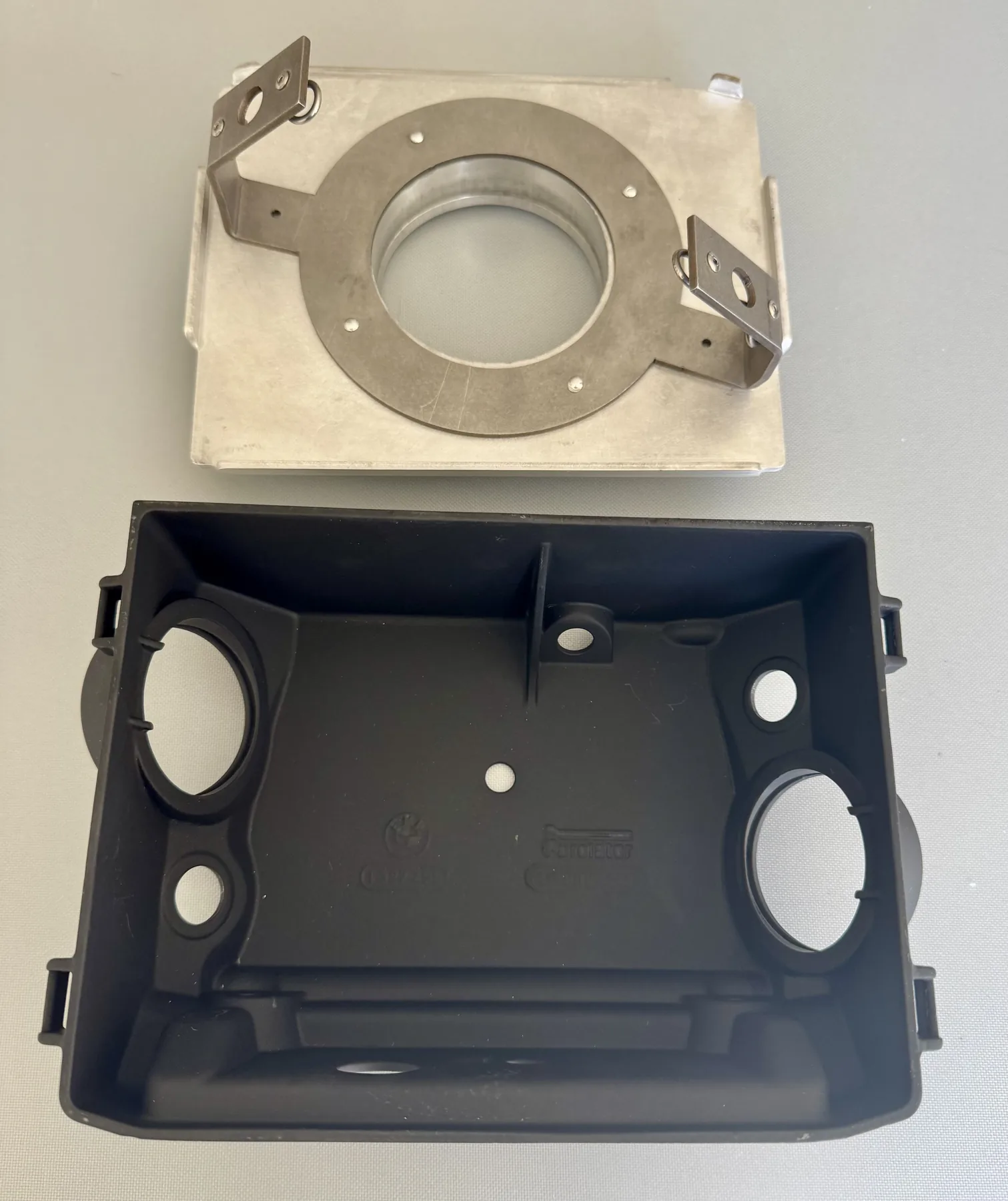
The lid begins as a precision laser-cut aluminum blank before bending. Inside the lower pan, a laser-cut steel carrier ring supports the DZUS spring receptacles. Steel is used deliberately at this spring interface: its stiffness and elastic behavior make the carrier less susceptible to permanent set, provide reliable return after repeated engagement, and offer useful fatigue margin.
From design to metal
A design like this becomes useful only when it can be reproduced accurately.
That transition has depended heavily on Ben at All Metal Fabricators. His principal contribution has been the precision laser-cutting behind the aluminum lid and internal steel carrier ring, but his role has reached beyond machine time alone.
Ben’s experience across automotive, motorcycle, and other fabrication projects has helped move the airbox from a one-off idea toward a small, repeatable series. His work has made it possible to hold onto the details that matter: fit, alignment, fastener positioning, and the restrained appearance of the finished assembly.
In that sense, All Metal Fabricators is not merely a vendor in the background. Ben has been one of the people who helped turn the Custom Konrad idea into physical hardware.
Two quarter turns
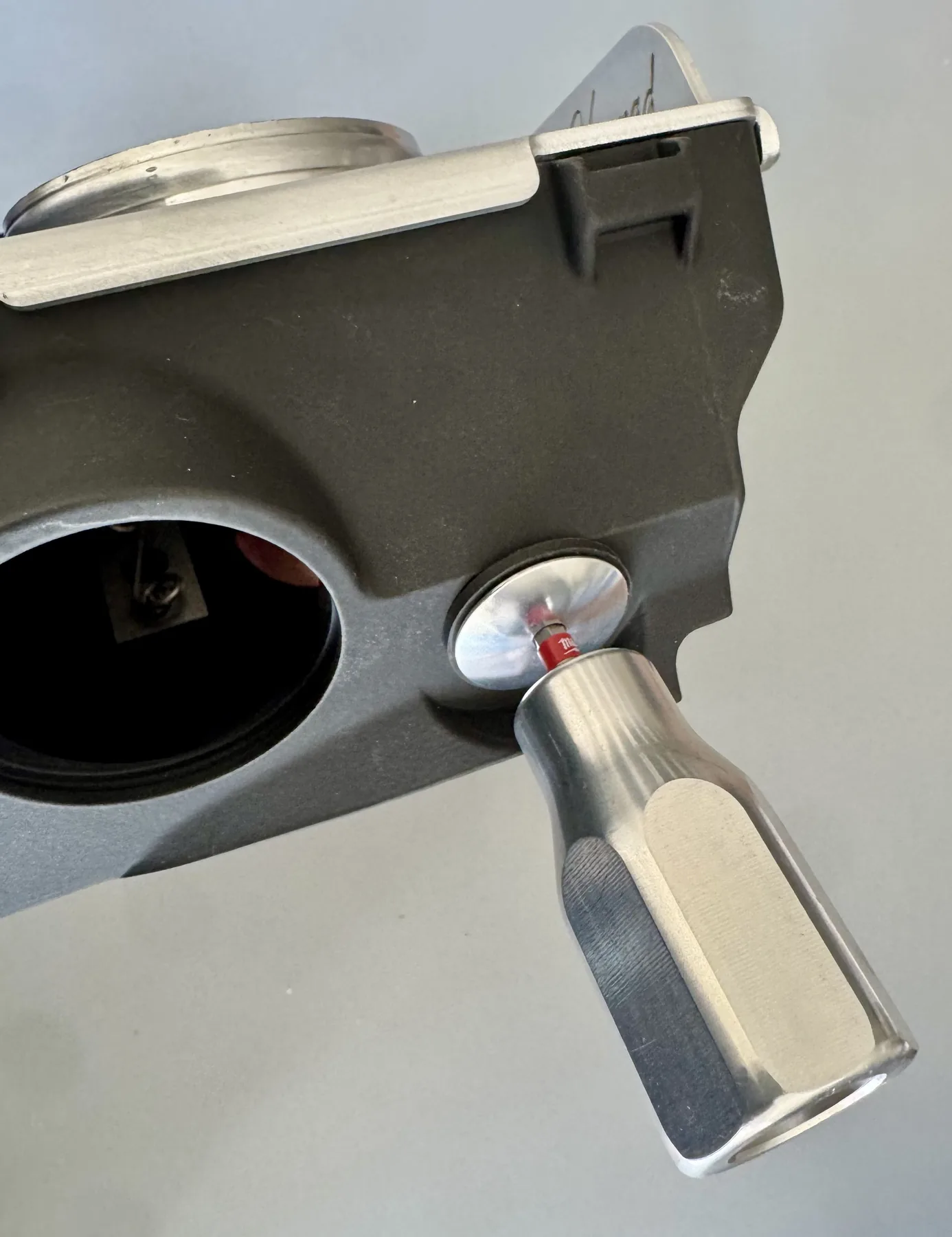
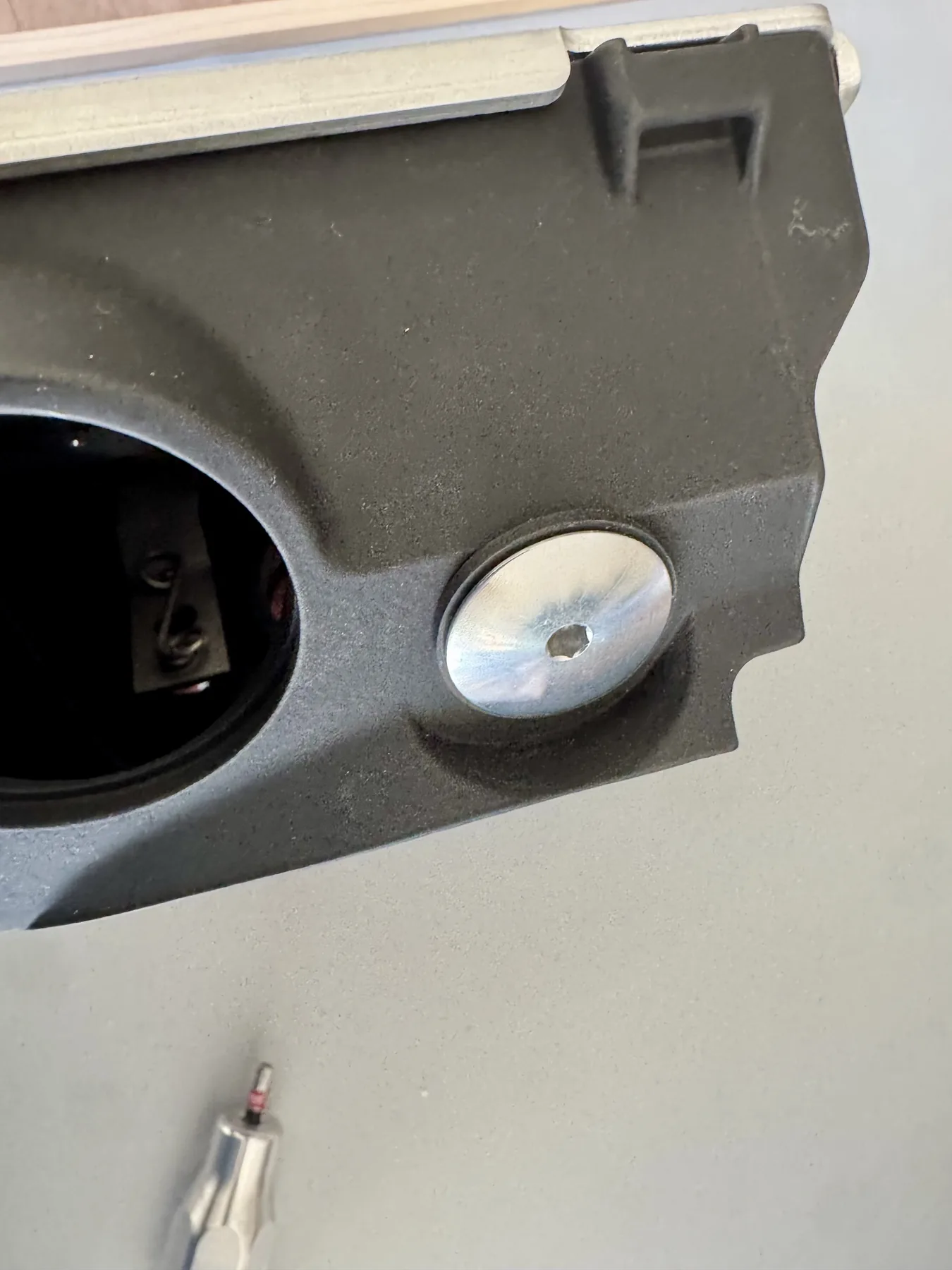
The DZUS system is the defining mechanical interaction of the design. Each fastener engages a spring receptacle packaged inside the lower pan. The fastener does not simply clamp the lid; it provides a discrete, repeatable locked position that can be released just as deliberately.
The current first-series hardware uses a 3/16-inch hex drive.
Sealing and isolation
A later refinement adds a thin silicone-rubber isolation and sealing interface between the aluminum lid and the lower airbox pan.
This detail serves more than one practical purpose. It improves sealing at the perimeter and prevents direct metal-to-metal contact between the lid and lower pan, helping reduce interface wear while suppressing a potential source of secondary noise or rattle.
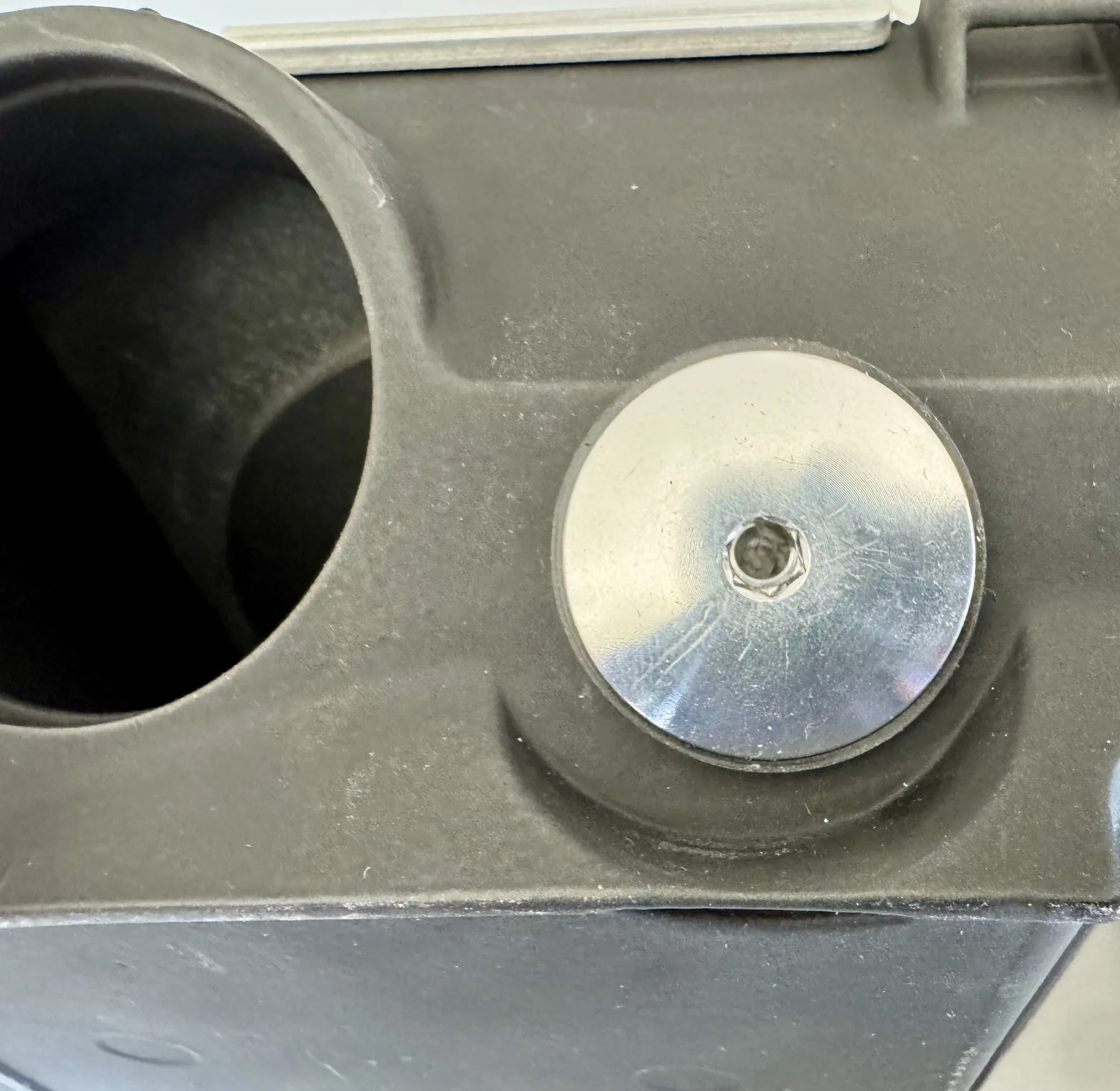
Air sealing also extends to the attachment hardware. Potential bypass paths through the attachment hardware are sealed during fabrication so unfiltered air cannot be drawn through the attachment points. This sealing operation is completed during fabrication; it is not part of owner installation.
Inside the design
The spring hardware is intentionally contained within the existing envelope. That matters both aesthetically and mechanically: the visible exterior remains simple, while the retention mechanism is protected inside the airbox structure.
Installation philosophy
The fabrication photographs below document how the prototype was developed, not what an owner should have to reproduce.
The first-series assemblies are being developed as prepared components. The installation objective is a component exchange and fit-verification exercise—not a requirement for the owner to fabricate brackets, bond hardware or reverse-engineer the prototype.
A final illustrated installation procedure will be frozen with the first-series configuration. It will document the prepared assembly, filter installation, lid engagement, sealing interface and final fit checks as discrete steps.
That distinction is intentional: development can be exploratory; installation should be boringly straightforward.
Development record
The prototype necessarily contains evidence of how the design was found: bracket experiments, sealing work, fit checks and incremental refinements. Those details are worth preserving because they explain the path to the finished arrangement, but they are not the customer installation process.
First series
The first production-minded series is intentionally small: six units.
Several are intended to be placed with experienced BMW specialists and enthusiasts specifically to solicit critical feedback. One is reserved for the R100R. Two are intended for sale. The purpose of the series is not volume; it is to expose the design to different motorcycles, hands and service habits before deciding what should—or should not—change.
The HPN-style rubber-band filter retention remains a possible variant. The current configuration favors the traditional mounting ring because most filter changes happen during normal maintenance rather than against a rally clock.
What changes next
The first-series design is deliberately allowed to evolve. Likely areas of refinement include final installation documentation, first-series service experience, and any changes justified by field feedback.
The objective is not novelty. It is a small mechanical system that becomes easier to trust each time it is opened, closed and ridden.
Visible when servicing. Invisible when riding.